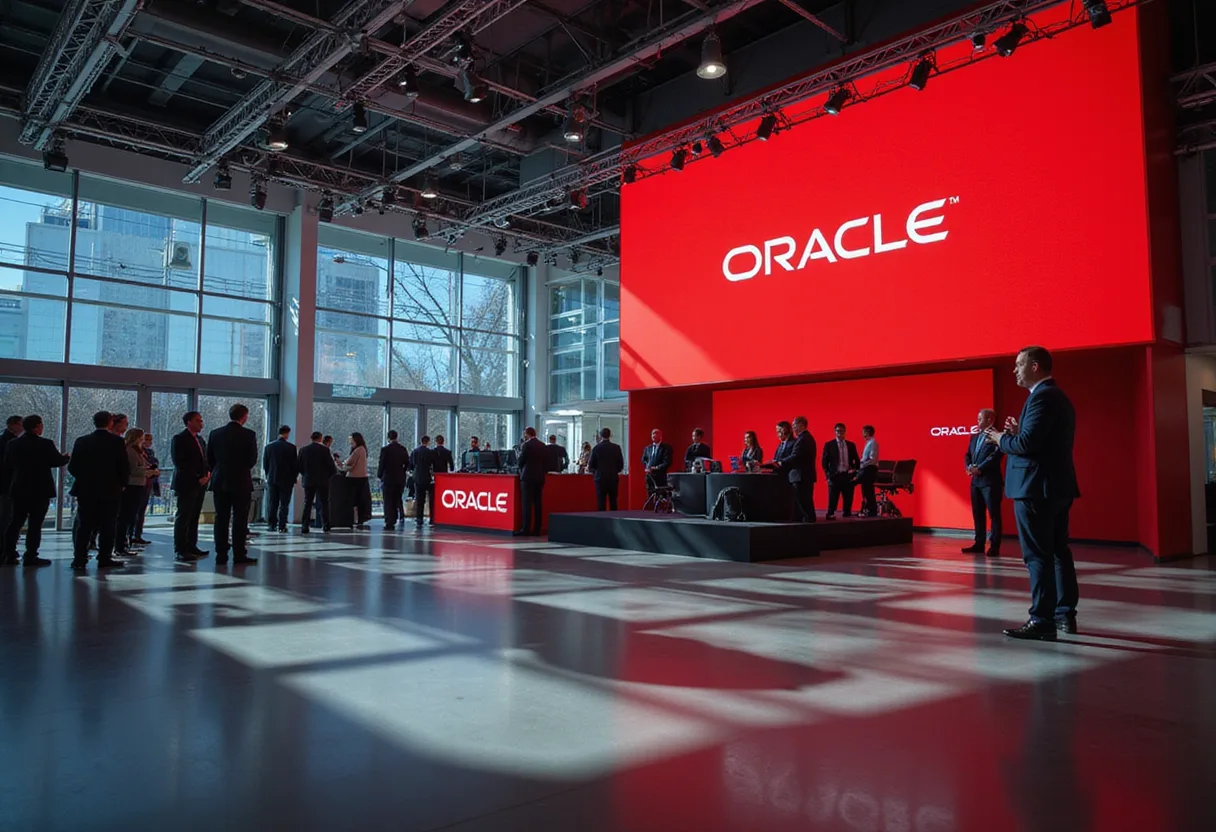
Oracle Pours $1.5 Billion Into Its AI Data Platform Push
Oracle has committed $1.5 billion to strengthen its AI data platform strategy, a bet aimed at making the vendor a default destination for enterprises rebuilding their data estates around artificial intelligence workloads.
The figure, reported by Analytics India Magazine, puts a hard number on what has until now been a largely rhetorical push by Oracle to reposition itself in a market where rivals have moved faster on AI-native data infrastructure. For CIOs, the question is straightforward: does this money change what Oracle can actually deliver, and when?
What problem is Oracle trying to solve with $1.5 billion?
Oracle's core business remains databases and enterprise applications, and both remain deeply embedded in the world's largest companies. But the AI buildout has shifted budgets toward platforms that unify storage, compute and model-serving in a single stack — an area where newer entrants and hyperscale competitors have set the pace.
The reported investment signals Oracle intends to defend its installed base rather than watch AI-era workloads migrate elsewhere. Enterprises running mission-critical Oracle databases now face pressure to layer machine learning, retrieval and analytics on top of that data without re-platforming it.
Where could the money go?
While the reporting frames the investment as a boost to Oracle's AI data platform ambitions, the specific allocation across engineering, infrastructure and go-to-market will determine its impact. Based on the announcement's framing, the plausible priorities include:
- Tighter integration between Oracle's database technologies and AI model training or inference pipelines;
- Expanded capacity in Oracle Cloud Infrastructure to host data-heavy AI workloads;
- Tooling that lets existing Oracle customers query and feed their operational data into AI applications with less engineering overhead.
Each of these paths addresses a different pain point in enterprise AI programs: data gravity, compute cost, and the integration tax that stalls pilots before production.
What does this mean for enterprise buyers?
For organizations already committed to Oracle, a $1.5 billion platform investment offers a credible argument to consolidate AI workloads alongside existing database estates rather than fragmenting architecture across multiple vendors. That consolidation can cut data-movement costs and simplify governance — two of the most persistent line items in AI budgets.
For shops running multi-cloud strategies, the calculus differs. The investment raises the competitive stakes and should strengthen buyer leverage in negotiations, regardless of platform choice. CIOs evaluating data platform contracts in the coming quarters should watch for concrete deliverables — versioned features, pricing changes, capacity commitments — rather than positioning statements.
What should IT leaders watch next?
The measure of this investment will be execution. Enterprise buyers will want to see whether Oracle ships platform capabilities that reduce the distance between operational data and AI consumption, and whether pricing reflects the scale of the bet.
A $1.5 billion commitment is significant, but it lands in a market where rivals are spending at similar or larger scale. The decisive factor for CIOs will not be the headline number. It will be whether Oracle's platform lets teams move data from systems of record into production AI faster and cheaper than the alternatives already do.
Until those capabilities ship, treat the announcement as a signal of intent — a well-funded one, from a vendor with one of the largest enterprise data footprints in the market.
Source: Google News: data platform governance
Rebecca Stone
Show full bio
Senior reporter covering money, funding and market shifts around enterprise information technology and the leaders who run at CIO Monitor.