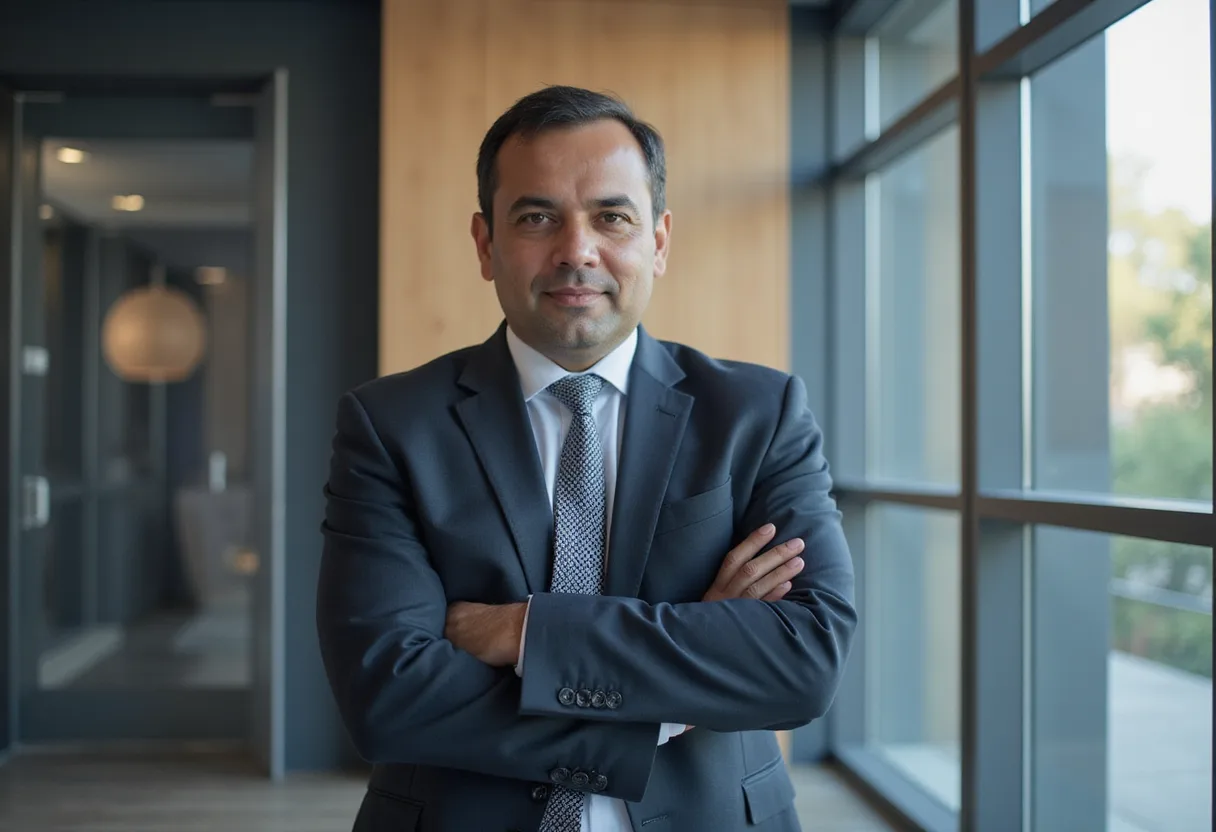
Altera Names Nishit Sahay Chief Information Officer
Altera has appointed Nishit Sahay as its Chief Information Officer, the company announced. The move puts a new executive in charge of enterprise technology strategy at one of the industry's best-known programmable-logic vendors.
The appointment lands at a consequential moment for the supplier. Altera now operates as a standalone business after Intel moved to separate the former Programmable Solutions Group, a unit Intel originally built around its roughly $16.7 billion acquisition of Altera in 2015. For an organization of that lineage, the CIO chair carries unusual weight.
What does the CIO role cover at Altera?
As Chief Information Officer, Sahay takes ownership of the company's IT estate. That scope typically spans:
- Enterprise applications — ERP, CRM, PLM and the data pipelines that feed chip design and manufacturing operations
- Infrastructure and cloud strategy, including the systems that connect Altera to foundry partners, distributors and channel players
- Cybersecurity posture and compliance, a board-level concern across the semiconductor supply chain
- Data and analytics platforms that support product planning and customer programs
Semiconductor CIOs also carry workloads unique to the sector: engineering compute farms for FPGA design and verification, tightly controlled IP repositories, and IT separation work when a business carves itself out of a parent company. That last item matters here. Detaching IT systems, contracts and data from a parent the size of Intel is a multi-year program, and the executive who owns it shapes how fast the standalone business can move.
Who is Nishit Sahay?
The announcement confirms Sahay's appointment to the CIO post but does not detail his prior roles or the executive he succeeds. Enterprise IT leaders tracking Altera's organization chart will want the fuller biography as it circulates through vendor channels and professional profiles.
What the title itself signals is clear enough. Altera is staffing its senior leadership for life as an independent company, and it is doing so with a dedicated technology executive rather than leaving IT under a combined operations or finance mandate.
Why should enterprise buyers care?
Altera's chips sit inside infrastructure that enterprises depend on — telecommunications equipment, industrial control systems, data-center acceleration cards and embedded platforms. Changes at the vendor's executive level rarely shift product roadmaps overnight, but they can affect:
- How the company runs its supply-chain and order-management systems, which partners and large customers touch directly
- The pace of any remaining separation-related system migrations inherited from the Intel era
- Digital channels for design tools, documentation and support that FPGA customers use daily
For CIOs at Altera customers and partners, the practical takeaway is continuity risk is low in the near term: leadership appointments of this kind signal stabilization, not disruption.
What happens next?
Watch for three things. First, any organizational announcements that fill out Sahay's IT leadership team. Second, signals on vendor consolidation in Altera's application stack, a common move for newly independent companies looking to cut run-rate costs. Third, public appearances where the new CIO lays out a technology agenda — typically the first concrete indicator of where enterprise IT at the company is headed.
Altera has not publicly framed the appointment with a quoted statement, so buyers should treat the executive's own communications, when they come, as the authoritative read on priorities.
The bottom line: Altera has a Chief Information Officer in Nishit Sahay, and the standalone FPGA vendor now has a senior owner for the IT decisions that will define its operations apart from Intel.
Source: Google News: CIO enterprise IT
Rebecca Stone
Show full bio
Senior reporter covering money, funding and market shifts around enterprise information technology and the leaders who run at CIO Monitor.